
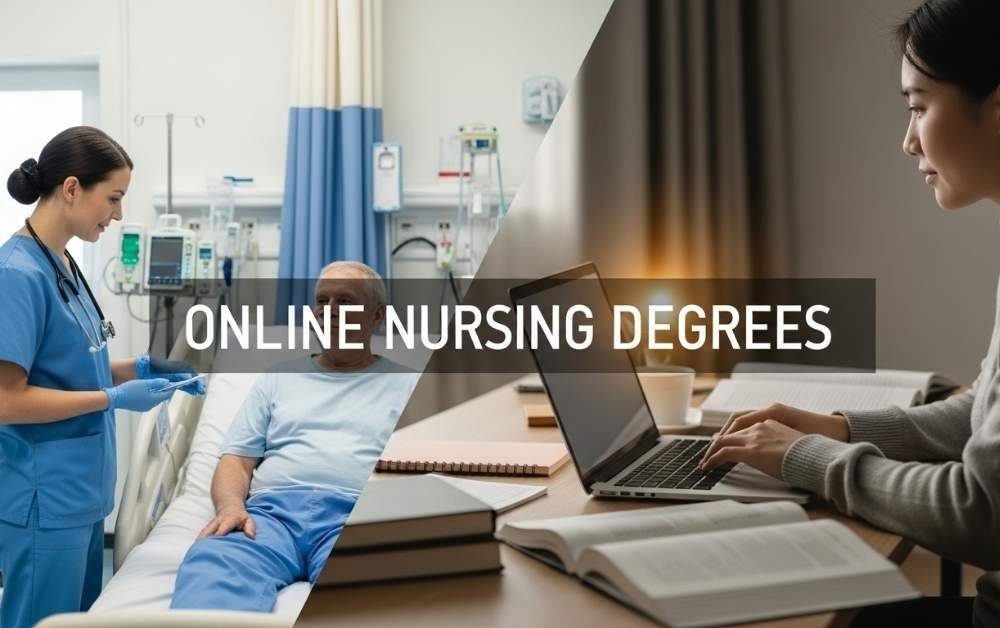
The global healthcare landscape is currently facing a “perfect storm.” With the median age of Registered Nurses (RNs) reaching 52 and a projected 166,100 annual job openings in the U.S. alone through 2034, the demand for highly skilled nursing professionals has never been higher.
In response, the traditional halls of nursing academia are being traded for digital classrooms. The shift toward online Accelerated Bachelor of Science in Nursing (ABSN) and Master of Science in Nursing (MSN) programs is no longer just a trend—it is the new standard for professional mobility.
1. The Rise of the Online Accelerated BSN (ABSN)
For career changers who already hold a degree in another field, the ABSN is the fastest route into the nursing profession. By leveraging prior academic credits, these programs condense a four-year degree into 12 to 24 months.
Why Professionals are Choosing Online ABSNs:
- Time Efficiency: Most programs allow students to enter the job market in half the time of a traditional BSN.
- Career Integration: Designed for “second-career” nurses, these programs value the soft skills (time management, communication) acquired in previous industries.
- Cost Savings: While the per-credit cost can be 10–15% higher than standard programs, the shorter duration reduces overall expenses related to housing and lost wages.
2. Elevating the Workforce: The Online MSN
For practicing RNs, the Master of Science in Nursing (MSN) is the gateway to leadership, specialized practice, and significantly higher earnings. In 2026, the demand for Advanced Practice Registered Nurses (APRNs) is projected to grow by 38%, far outpacing general occupation growth.
| Role | Impact of Online MSN |
| Nurse Practitioner (NP) | Allows nurses to provide primary care, often with full prescriptive authority. |
| Nurse Educator | Directly addresses the faculty shortage by training the next generation of nurses. |
| Clinical Leadership | Equips nurses with data literacy and AI-assisted diagnostic skills for administrative roles. |
3. Technology: Bridging the “Theory-Practice” Gap
A common critique of online nursing education is the lack of hands-on experience. However, 2026 technology has largely neutralized this concern through a “hybrid” approach:
- Virtual Simulations: Using VR, students can perform assessments and diagnoses in a risk-free environment.
- Telehealth Training: Students gain experience in remote patient monitoring, a sector predicted to handle 30% of all medical visits by the end of this year.
- Local Clinical Placements: Most accredited online programs partner with hospitals in the student’s local area, ensuring that while the theory is digital, the practice remains human.
4. Challenges for the Working Professional
Despite the flexibility, online nursing degrees are not “nursing lite.” They require:
- Self-Discipline: Without a physical classroom, students must proactively manage rigorous schedules.
- Clinical Coordination: Students often take the lead in coordinating their 700+ required practical hours with local preceptors.
- Technological Adaptability: Success requires comfort with AI-driven learning platforms and digital handover processes.
The Verdict: A Vital Evolution
The global shift toward online nursing degrees is a pragmatic solution to a systemic crisis. By allowing working professionals to learn without relocating or resigning, these programs are expanding the nursing pipeline at a critical moment. For the individual, it offers a path to a more autonomous, better-paying, and highly stable career.
Professional Tip: When choosing a program, ensure it is accredited by the CCNE or ACEN. This ensures your degree is respected by employers and that you are eligible for the NCLEX or other licensing exams.
Would you like me to help you compare specific accreditation standards for these programs or look for top-rated online nursing schools in a particular region?